
An overbite is one of the most common reasons people end up in an orthodontist’s chair, and it is also one of the most misunderstood. Almost everyone has some overlap between their top and bottom front teeth. The question is how much, and whether it is causing problems you have learned to live with.
Braces remain the most reliable way to correct a significant overbite, because they give an orthodontist direct control over how each tooth moves and, in growing patients, how the jaws relate to each other. Here is what that actually involves.
What an Overbite Is, and When It Becomes a Problem
An overbite is when your upper front teeth extend down over your lower front teeth further than they should. A normal bite has roughly one to two millimeters of overlap. Past about three or four millimeters, orthodontists start calling it a deep overbite, and past that the lower teeth can begin biting into the roof of the mouth.
There is a related measurement worth knowing, because people mix the two up constantly. Overbite is vertical, how far the top teeth come down. Overjet is horizontal, how far the top teeth stick out in front. You can have one without the other, and the treatment is not identical.
An overbite usually traces back to genetics and the way the jaws grew, though prolonged thumb sucking, extended pacifier use, teeth grinding, and missing back teeth can all make one worse.
Signs your overbite is worth treating
A mild overbite may never cause you a day of trouble. The ones worth correcting tend to announce themselves:
- Your lower front teeth contact the roof of your mouth when you bite down
- Noticeable wear on the edges of your front teeth
- Jaw soreness, clicking, or recurring headaches around the temples
- Difficulty biting into food cleanly with your front teeth
- Gum irritation behind the upper front teeth
- Speech that catches on certain sounds
Left alone, a deep overbite tends to get harder to correct, not easier. The wear on your enamel does not reverse, and gum recession behind the upper front teeth can become its own problem.
How Braces Correct an Overbite
Braces fix an overbite by doing two things at once: intruding the front teeth, meaning moving them back up into the bone, and leveling the bite so the back teeth carry their share of the load. The archwire does most of that work, and your orthodontist shapes and changes it over the course of treatment to direct the movement.
Depending on your case, a few additional components may come into play:
- Elastics. Small rubber bands worn between the upper and lower braces that gradually shift the bite relationship. These only work if you actually wear them, which is the single biggest variable in overbite treatment.
- Bite turbos or bite ramps. Small stops bonded behind the upper front teeth that keep you from fully closing down, giving the back teeth room to erupt and level the bite.
- Temporary anchorage devices. In adult cases where there is no growth left to work with, small anchor points let the orthodontist intrude front teeth without unwanted movement elsewhere.
Treatment for a straightforward overbite generally runs 12 to 24 months. Cases involving a significant jaw discrepancy can run longer, and your orthodontist will tell you that at the consultation rather than halfway through.

Children versus adults
The honest answer is that timing changes what is possible. In a child or younger teen who still has growth ahead of them, an orthodontist can influence how the jaws develop, which makes a skeletal overbite far easier to address. That is why the American Association of Orthodontists recommends a first evaluation by age seven, well before most kids are ready for full braces.
In adults, growth is finished, so treatment works by moving teeth within the jaws they have. That still corrects the great majority of overbites. Severe skeletal cases in adults occasionally need a combined orthodontic and surgical approach, which is a conversation your orthodontist will have with you openly rather than discovering it later.
Braces or Clear Aligners for an Overbite?
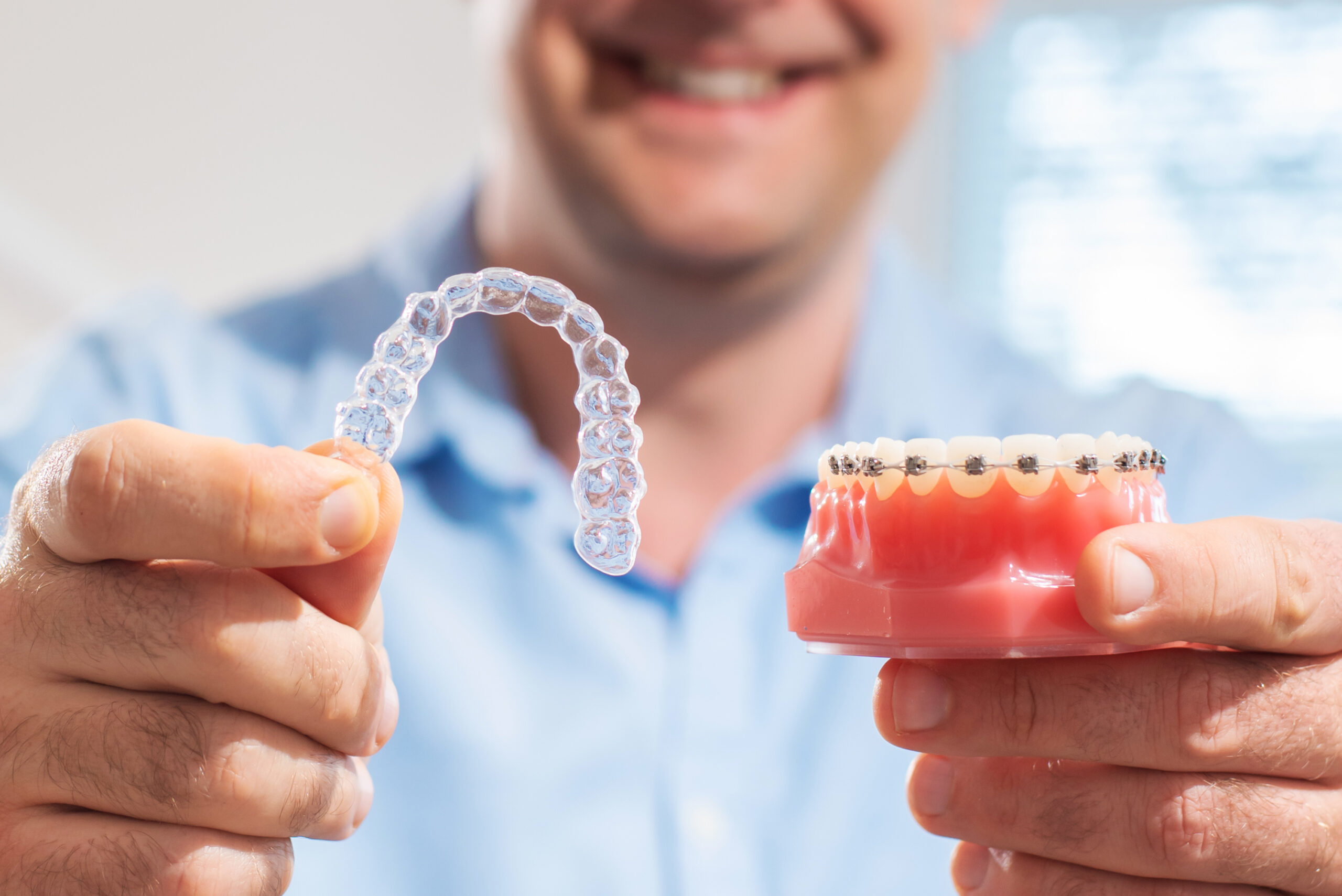
Clear aligners can treat many mild to moderate overbites, and for some patients they are the better fit. For deeper overbites, braces still have the advantage, because fixed brackets give an orthodontist more control over intruding front teeth and more reliable force delivery than a removable tray. There is also no compliance question with braces, since they are working whether you remember them or not.
The real answer depends on how deep the overbite is and what else is going on in your bite, which is why the comparison between braces or Invisalign is worth having with an orthodontist rather than settling in advance.
What to Expect Once Treatment Starts
Placement takes about an hour and does not hurt, though most patients describe pressure for the first several days and again after adjustments. If you want the specifics before you commit, we wrote up what the first few days feel like in more detail.
From there you will come in every four to eight weeks so your orthodontist can change the archwire and check your progress. Overbite correction is gradual and not always visible month to month, which is why progress photos are useful. When the braces come off, a retainer holds the correction, and with a deep overbite the retention phase genuinely matters, because bites have a tendency to drift back toward where they started.
Getting Your Bite Checked
If you recognize your own bite in any of this, the next step is simply having someone look at it. We offer a free consultation that includes digital imaging and a full evaluation, and you leave with a straight answer about whether your overbite needs treatment at all. Sometimes it does not.
Adirondack Orthodontics treats patients of every age from six offices across the Capital Region, with board-certified orthodontists including Dr. Sergey Berenshteyn, Dr. Ted Ha, Dr. Max Sanacore and Dr. Hiral Rakholia. Dr. Ted Ha and the rest of the team plan every case in house.
If you are weighing braces in Albany specifically, that page walks through metal and ceramic options and what treatment looks like start to finish. And whatever you decide about your bite, there is a real case to be made for the confidence that comes with it.