There is more than one way to straighten your teeth, and the right choice depends on your goals, your lifestyle, and the complexity of your case. Adirondack Orthodontics offers the full range of options across our six Capital Region offices, so you are never limited to a single approach. Here is how the main types of braces compare, so you can walk into your free consultation already knowing the questions to ask.
Metal Braces
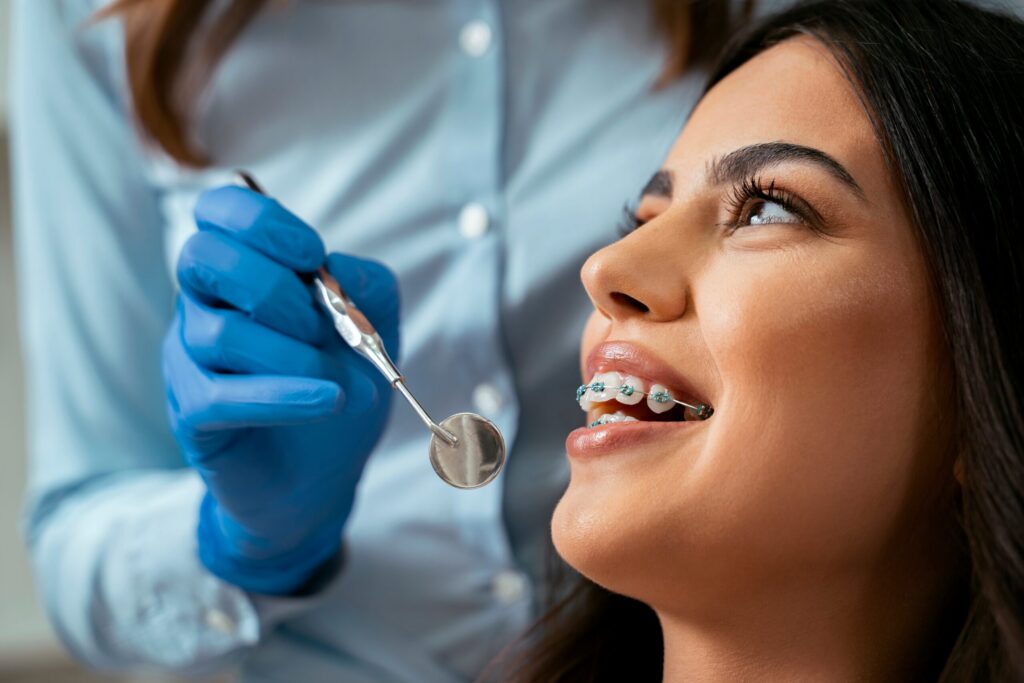
Traditional metal braces use stainless steel brackets bonded to each tooth and connected by a thin archwire. That wire applies gentle, steady pressure, and as your orthodontist adjusts it at regular visits, your teeth move gradually into their ideal positions. It is the most common and most time-tested approach in orthodontics.
Metal braces are also the most versatile option. They handle everything from simple crowding and spacing to complex bite correction that removable options cannot always address, which is why they remain a mainstay for patients of every age. Today's brackets are considerably smaller and more comfortable than the braces most parents remember, and small colored bands let younger patients add a bit of personality between visits.
Ceramic (Clear) Braces
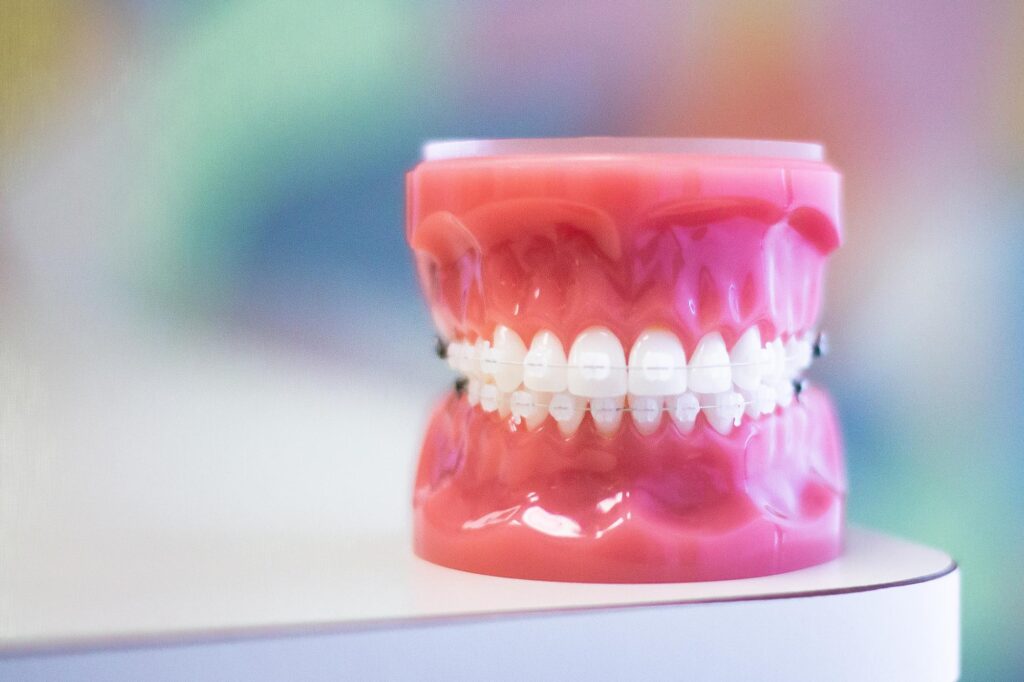
Ceramic braces work exactly like metal braces, using the same brackets-and-archwire system, but the brackets are tooth-colored or clear so they blend into your smile. From a normal talking distance, most people will not notice them, which makes them a popular middle ground for teens and adults who want reliable fixed treatment without the look of metal.
Because the brackets are made of a more delicate material and can pick up stains from coffee, tea, or smoking if they are not kept clean, ceramic braces ask for a little extra day-to-day care. For patients willing to put in that effort, they offer nearly all the treatment power of metal with a much lower profile. You can learn more about the discreet options on our clear braces page.
Invisalign Clear Aligners
Invisalign uses a series of clear, custom-made aligners that gently shift your teeth over time. You wear each set for one to two weeks before moving to the next, and small tooth-colored attachments are sometimes added to help guide specific movements. Because the aligners are removable, you eat, brush, and floss exactly as you normally would, and they are nearly invisible when worn.
Invisalign is an excellent option for mild to moderate cases and for anyone who wants the most flexible, low-profile treatment available. The trade-off is discipline: aligners only work when they are in, so they need to be worn 20 to 22 hours a day. Adirondack Orthodontics is one of the top 1% of Invisalign providers in the country, which means we can treat cases with clear aligners that many other offices would turn away.
Types of Braces Compared
Every option below can produce a beautifully aligned smile. The differences come down to visibility, convenience, and which approach best fits your case. The full breakdown of the cost of braces is reviewed at your consultation, where you get an exact, all-in figure.
| Metal | Ceramic | Invisalign | |
|---|---|---|---|
| Visibility | Most visible | Subtle, blends in | Nearly invisible |
| Removable | No | No | Yes |
| Best for | All ages, complex cases | Teens and adults wanting discretion | Mild to moderate cases, flexible lifestyle |
| Daily care | Standard brushing and flossing around brackets | Extra care to avoid staining | Remove to eat and clean; wear 20–22 hrs/day |
| Cost | Reviewed at your free consultation, based on your case | ||
Start With a Free Consultation
Not sure which option is right for you? That is exactly what your consultation is for. Adirondack Orthodontics has six offices across the Capital Region, and your first visit is always free. Schedule your free consultation and we will map out your options together.

Braces for Every Age
Orthodontic treatment is not just for teenagers anymore. For children, an early evaluation lets our orthodontists monitor how the jaw and adult teeth are coming in, and in some cases a short phase of early treatment can guide growth and simplify later care. Teens remain the most common age for braces, and they have every option open to them, from classic metal to clear aligners. And adults now make up a growing share of orthodontic patients, often choosing ceramic braces or Invisalign for a discreet path to the smile they have always wanted. Whatever your age, the right type of braces is the one matched to your specific goals and case.
What to Expect During Treatment
Every treatment starts with a consultation and a set of records, including digital scans, so your orthodontist can map out a precise plan. Once you begin, fixed braces are checked and adjusted at regular visits, while clear aligners are swapped for the next set on a set schedule with periodic check-ins. Most patients wear braces or aligners for roughly 12 to 24 months, though your exact timeline depends on the complexity of your case and how closely you follow your orthodontist's instructions.
When active treatment finishes, retainers keep your new smile in place, and they are an important part of protecting the result long term. Throughout the process, our team is available for questions and quick adjustments, so you are supported from your first visit through your final one.
How to Choose the Right Type of Braces
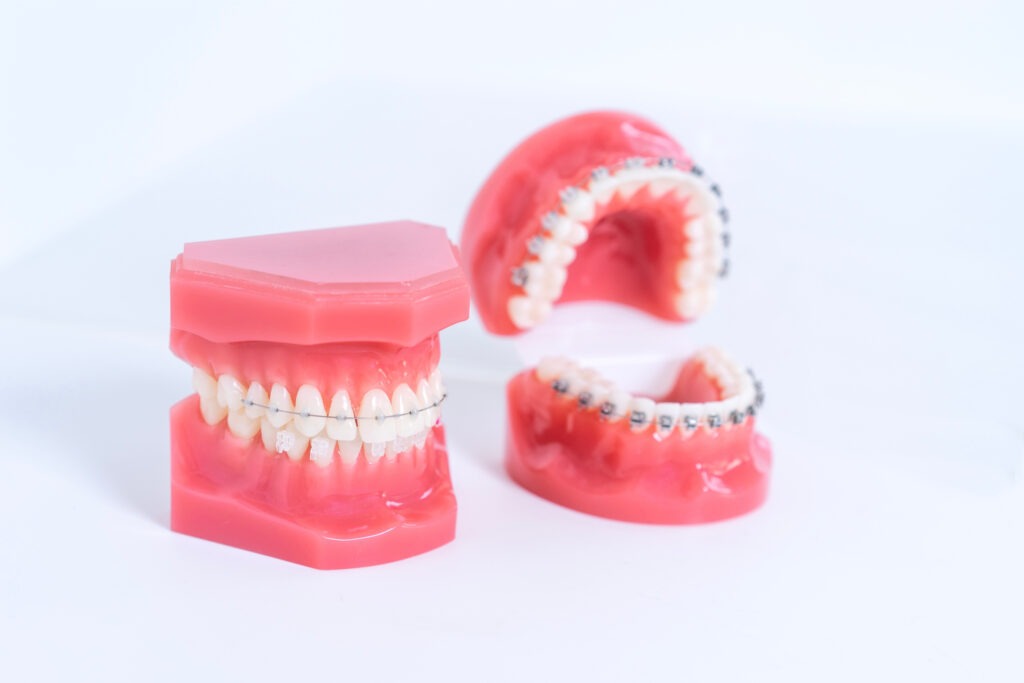
The best type of braces is the one that matches your case and your life. A few things to weigh: how complex your alignment or bite correction is, how much you care about visibility, whether a removable option suits your routine and discipline, and your age and stage of treatment. Our board-certified orthodontists review all of this with you and recommend the option that will give you the best result, rather than a one-size-fits-all answer.
Frequently Asked Questions About Types of Braces
What types of braces do you offer?
Adirondack Orthodontics offers metal braces, ceramic (clear) braces, and Invisalign clear aligners across all six of our Capital Region offices. Because we offer the full range, your treatment is matched to your case rather than to whatever a single-option office happens to provide.
Which type of braces is best?
There is no single best option for everyone. The right choice depends on how complex your case is, how much you care about visibility, and how a removable versus fixed option fits your routine. Your orthodontist recommends the best fit for your goals at your free consultation.
Are ceramic or clear braces as effective as metal braces?
Yes. Ceramic braces use the same brackets-and-archwire mechanics as metal braces, so they are just as effective for most cases. The main differences are that they are less visible and that the brackets need a little extra care to avoid staining.
How do I know which type is right for me?
The surest way is a free consultation. One of our board-certified orthodontists will evaluate your teeth and bite, talk through your goals and lifestyle, and recommend the option that will give you the best result. You leave knowing your choices and what treatment would involve.
Ready to find your fit? The fastest way to know which type of braces is right for you is to talk it through with an orthodontist. Book your free consultation at any of our six Capital Region offices and take the first step toward your new smile.